
Mitsubishi Sports Cars That Ignite Your Drive
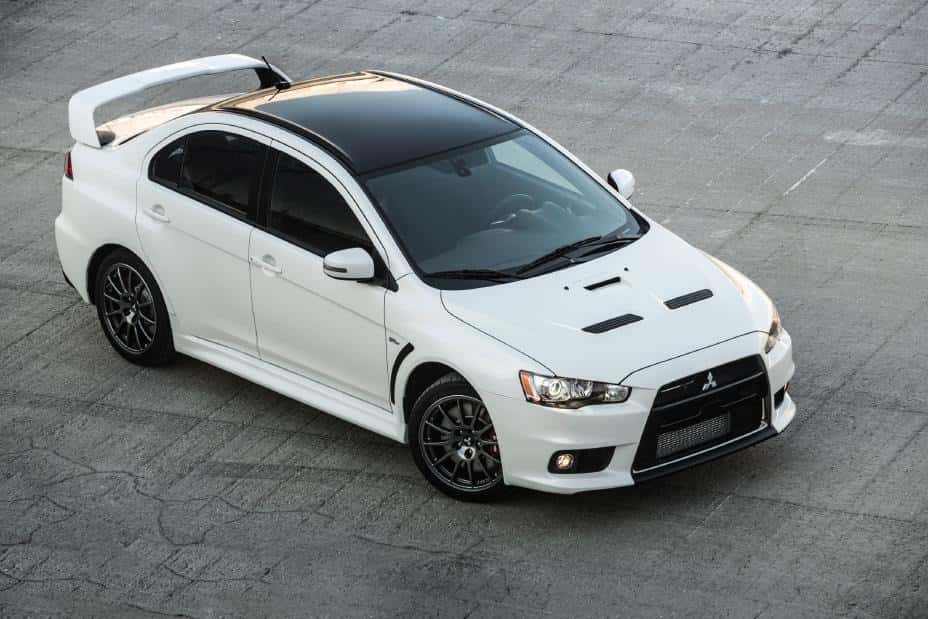
Ever wondered what happens when you combine limitless ambition with a turbocharger? The 1990s automotive landscape was a revolution fueled by high-octane Japanese engineering, leaving American muscle cars looking for traction. Others played it safe, but Mitsubishi kicked down the door, delivering a lineup that fused accessible performance with spaceship technology, forever changing how we define speed. This era birthed machines that moved our souls, establishing a legacy of affordable adrenaline that redefined the global car culture.
The Eastern Storm Surges
During the 1980s tech boom, Japanese automakers capitalized on a surging economy to engineer machines that defied physics without breaking the bank. Mitsubishi spearheaded this “Japanese Invasion,” swapping raw displacement for forced induction and sophisticated all-wheel-drive (AWD) systems.
They crafted vehicles with athletic styling and performance-oriented engineering that often embarrassed pricier European and American rivals, proving that you didn’t need a trust fund to own the asphalt. By democratizing speed, Mitsubishi positioned itself as the wild child of the industry, offering an emotional driving experience that resonated deeply with a new generation of enthusiasts.
The Eclipse: Defining a Generation
Launched in 1989, the Mitsubishi Eclipse arrived as a sleek, aerodynamic wedge that cut through the stale air of the entry-level coupe market. With its curvaceous lines and the legendary 4G63 turbocharged engine available in the GSX trim, it brought all-wheel drive to the masses, turning ordinary stoplights into launch pads.
The Eclipse became a canvas for youth culture, eventually immortalized in neon green by The Fast and the Furious, symbolizing speed, style, and individuality for a generation of tuners who lived life a quarter-mile at a time.
3000GT VR-4: A Spaceship for the Streets
If the Eclipse was a scalpel, the Mitsubishi 3000GT VR-4, launched in 1990, was a sledgehammer wrapped in velvet. This grand tourer was a technological showcase, boasting active aerodynamics that physically adjusted front and rear spoilers at speed to suck the car to the road, a feature so advanced it felt like science fiction.
With twin turbos, all-wheel steering, and an “Active Exhaust” that could switch between stealth mode and a roar, it challenged the Toyota Supra and Nissan 300ZX with sheer digital supremacy, offering a driving experience that was as intellectual as it was physical.
Lancer Evolution: Domination on Dirt and Tarmac
Born on the gravel in October 1992, the Lancer Evolution transferred World Rally Championship dominance directly to the street. This sedan was a wolf in sheep’s clothing, hiding a potent turbocharged powertrain and advanced all-wheel-drive systems like Active Yaw Control beneath a practical four-door exterior.
While Americans watched from afar until 2003, the Evo’s legend grew globally through Tommi Mäkinen’s rally victories, establishing Mitsubishi as the ultimate provider of grip and grit. Piloting the Evo, not just driving, demanded a connection between man and machine that few other vehicles could match.
Immortality in Pixels and Film
Mitsubishi won hearts through screens and speakers. Beyond the silver-screen fame of the Eclipse and Evo in The Fast and the Furious, these cars became digital garage staples in games like Gran Turismo and Need for Speed, educating millions about the benefits of AWD.
Perhaps most memorably, the Eclipse synchronized with the beat of Dirty Vegas’s “Days Go By” in a 2003 commercial that captured the essence of electronica and night driving, cementing the brand as a cultural icon that transcended the automotive world.
An Unfading Afterburn
Today, the spirit of 90s Mitsubishi sports cars lives on, fueling a collector’s market hungry for mechanical connection in a digital age. These machines shaped an era in which driving was an emotional experience, influencing modern designs and reminding us of a time when performance was raw and unfiltered.
Whether you’re hunting for a pristine VR-4 or dreaming of a rally-bred Evo, the legacy is clear: Mitsubishi exceeded the limits of building cars and ignited a passion that still burns. Welcome to the drive of your life.
More from Vision Mitsubishi
2025 Mitsubishi Outlander Sport Review: Surprising Favorite
Photo Source/Copyright: Edmunds Mitsubishi’s smallest crossover has been on sale since the 2011 model year. That’s a long run. Most vehicles get a full redesign every six or seven years, but Mitsubishi has chosen to keep tweaking, re-trimming, and repricing the Outlander Sport instead. If you have looked at one recently, much of…
Why Buy the Basic ES Mitsubishi Outlander?
Photo Source/Copyright: Edmunds Walking onto a dealership lot expecting an entry-level trim to feel like a penalty box is common, but the Mitsubishi Outlander ES breaks that expectation entirely. Mitsubishi loaded the base variant with hardware that many competing brands reserve for higher price brackets, closing the gap between the base version and upper…
Master Mitsubishi Dashboard Symbols and Their Meanings
Photo Source/Copyright: Mitsubishi Motors It’s more accurate to say the instrument cluster serves as a means of communication than as an alarm system, and a large part of the information it gives is standard. If you understand what the symbols on the Mitsubishi dashboard mean, you’ll be able to change uncertainty into a clear…